

GENERAL INFORMATION:
Evidence Based Birth
We highly recommend this website! Here, Rebecca Dekker provides the most current, evidence-based information on pregnancy and childbirth.
Childbirth Connection
An association dedicated to promoting evidence-based maternity care, based on the best available scientific research. Begin by looking for "A Guide to Effective Care in Pregnancy and Childbirth".
Spinning Babies
Resource using balance, gravity, and movement to help position a baby for an easier delivery.
Hallie Greider - Educational Director of Birth Matters podcast about “All Things Childbirth Education”.
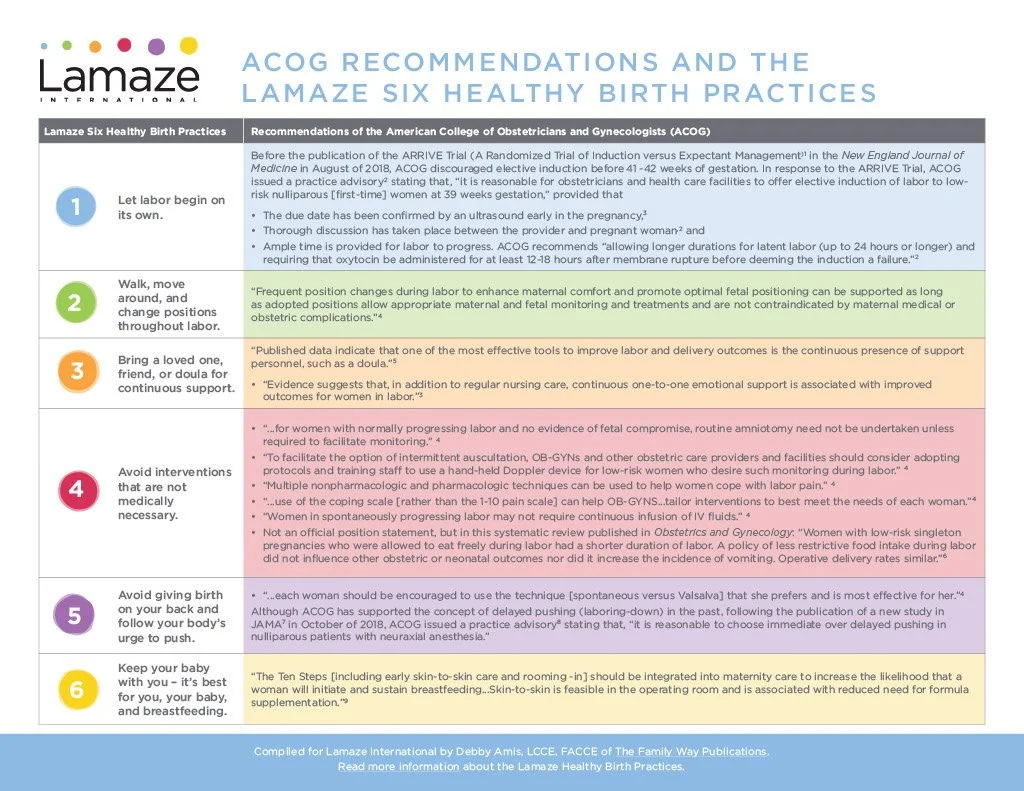
ACOG Recommendations and the Lamaze Six Healthy Birth Practices
DOULAS:
Doula Network of Fort Wayne (DNFW)
A Fort Wayne area resource for families wishing to understand the scope of care a doula provides as well as a list of local birth and postpartum support doulas.
Community Doula Collective
A Fort Wayne area resource for families wishing to understand the scope of care a doula provides as well as a list of local birth and postpartum support doulas.
VBAC INFORMATION AND SUPPORT:
International Cesarean Awareness Network (ICAN)
ICAN is a non-profit organization dedicated to improving maternal-child health by preventing unnecessary cesarean births through education, providing support for cesarean recovery and promoting vaginal birth after cesarean (VBAC).
VBAC Facts (Vaginal Birth After Cesarean)
This website provides access to research-based information, resources, continuing education, and support for vaginal birth after cesarean (VBAC).
STUDIES AND RESEARCH:
Meta-Analysis on Antenatal Perineal Massage (2020)
Evidence Based Birth: Article on “The Evidence on Group Beta Strep” (2023)
Evidence Based Birth: Article on “The Evidence of Inducing at 41 Weeks or Later.” (2026)
ACOG: Clinical Guidelines on Macrosomia (Practice Bulletin 216 from 2020)
Association between Pitocin use and postpartum mood disorders within the first postpartum year
Published in 2017, this study reported that peripartum exposure to oxytocin in women with a history of prepregnancy depressive or anxiety disorder increased the risk of postpartum depressive or anxiety disorder by 36% and in women with no history, exposure to peripartum oxytocin increased the risk of postpartum depressive or anxiety disorder by 32%.
We recommend reading the study as well as the analysis posted on Lamaze International’s website by Kathleen Kendall-Tackett,Ph.D., IBCLC, FAPA, and Kerstin Uvnäs Moberg, MD, PhD.
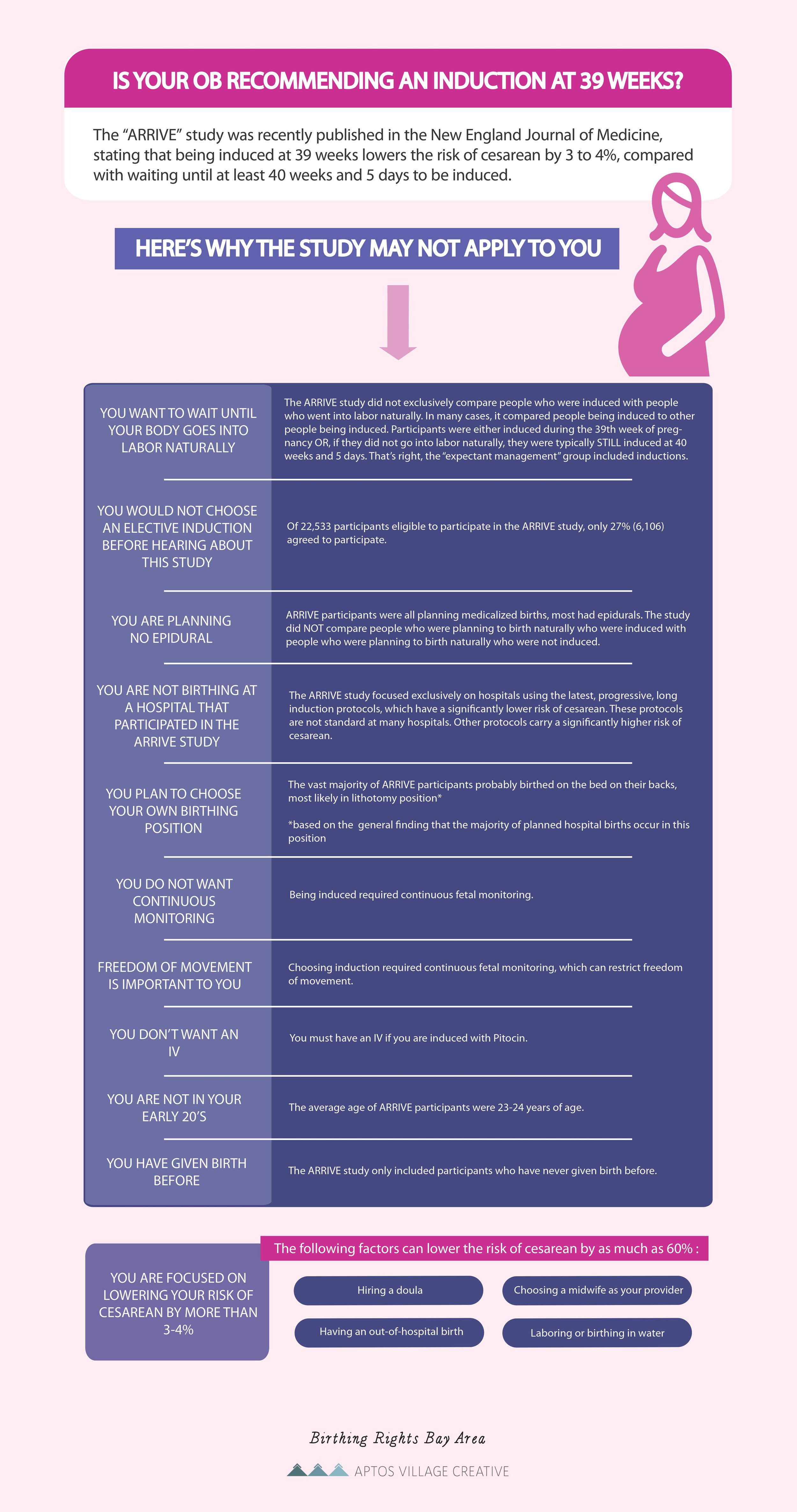
Labor Induction vs. Expectant Management
Published in 2018, the ARRIVE trial reported that low-risk 1st-time mothers would undergo fewer cesareans and their babies would be slightly better off if they underwent routine induction at 39 weeks compared with expectant management.
We recommend reading the report as well as Henci Goer’s analysis posted on Lamaze International’s website. The infographic to the right is helpful as well.